How Kingswood University is investing through the Vocatia Collaborative
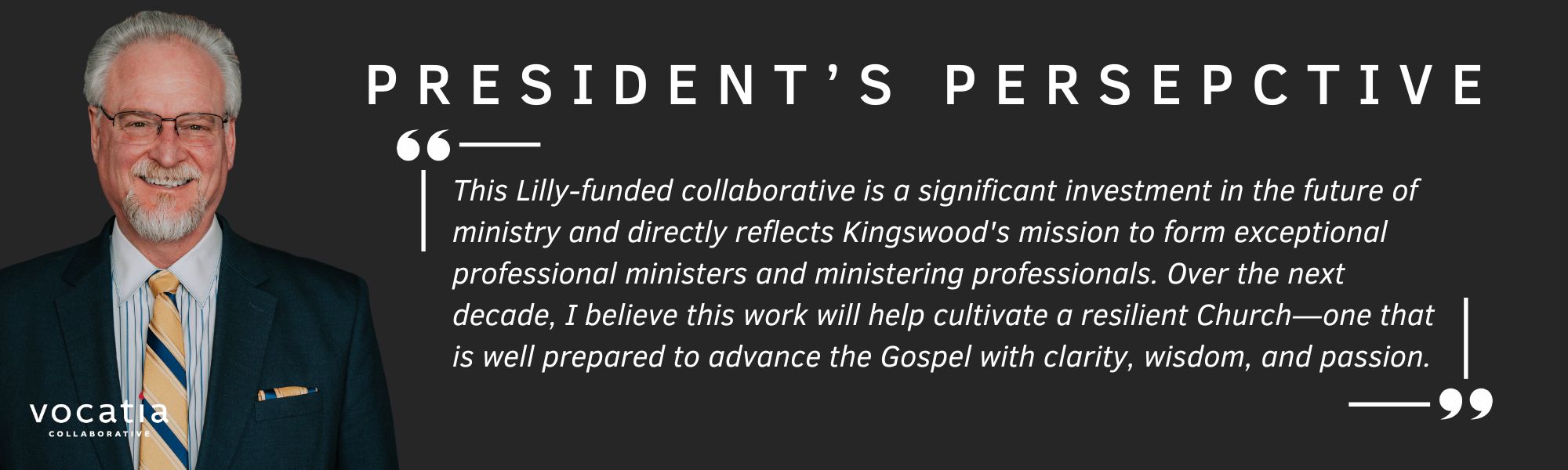
“Ministry is changing. Rather than simply responding to those changes, Kingswood University is investing in the future of ministry formation.
I am delighted that Kingswood University has been selected to participate in the Vocatia Collaborative. This Lilly-funded collaborative is a significant investment in the future of ministry and directly reflects Kingswood’s mission to form exceptional professional ministers and ministering professionals.
What excites me most is the opportunity to reimagine theological education in ways that equip leaders for the realities of today’s culture while remaining deeply rooted in biblical truth. Over the next decade, I believe this work will help cultivate a resilient Church—one that is well prepared to advance the Gospel with clarity, wisdom, and passion.”
— Dr. Rick Christman, President, Kingswood University
The Church has always adapted to meet the needs of a changing world.
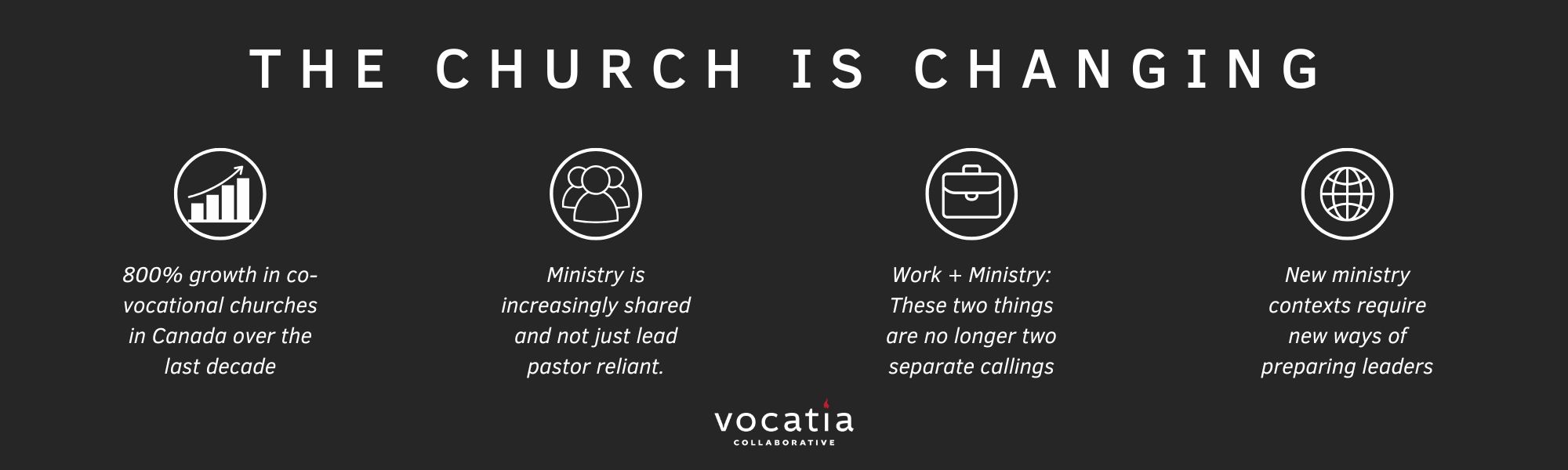
Today, ministry is entering another significant season of change. Across Canada, more pastors are serving in co-vocational roles. Churches are discovering new ways to engage their communities. Leadership is becoming increasingly collaborative, and ministry is happening not only from pulpits, but also in workplaces, neighbourhoods, classrooms, and community organizations.
These changes aren’t temporary trends.
They’re reshaping how leaders are called, equipped, and supported.
Co-vocational ministry is no longer the exception—it is becoming an increasingly important model for the Church. In Canada, research by Stephen Hawcko found an 800% increase in co-vocational churches over the past decade. Across the United States, 35% of clergy now serve bivocationally, with nearly half of evangelical pastors holding a second job.
Recognizing this, Kingswood University is proud to be one of four institutions participating in the Vocatia Collaborative, a Lilly Endowment-funded, five-year collaboration designed to help theological education prepare leaders for the future of ministry.
For Kingswood, this isn’t simply another project. It’s a strategic investment in the future of the Church.
Two Priorities, One Vision
Kingswood’s work within the Vocatia Collaborative will focus on two complementary areas that reflect both the changing realities of ministry and the University’s commitment to faithful theological education.
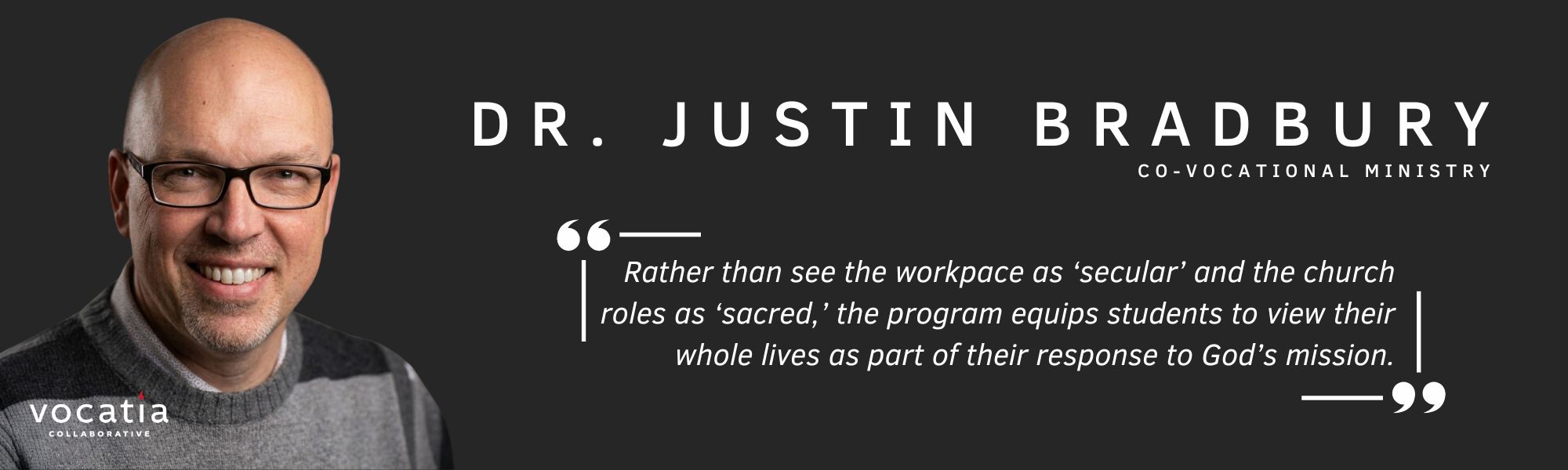
The first is co-vocational ministry. This work will help equip pastors, church leaders, laypeople, and congregations to understand, support, and thrive within a ministry model that brings together congregational leadership and meaningful work in the marketplace. Rather than viewing one calling as sacred and another as secular, co-vocational ministry recognizes that every area of life can become a place for Kingdom impact.
The second area of focus is oral preference learning. The complexities of earning a university degree has held many people back from getting a traditional “ministry degree.” This work will explore ways of teaching, learning, and demonstrating competency that incorporate oral, relational, visual, and experiential methods alongside traditional reading and writing.
Together, these two priorities represent Kingswood’s commitment to forming leaders who possess both theological depth and practical wisdom.
Equipping Leaders for Today’s Ministry
Leading Kingswood’s work in co-vocational ministry is Dr. Justin Bradbury, whose experience in church planting, pastoral ministry, district leadership, and theological education has given him a front-row seat to the changing landscape of ministry.
For Dr. Bradbury, the growing movement toward co-vocational ministry isn’t simply about adapting to changing circumstances, it’s about helping people embrace a fuller understanding of God’s calling.
“God has been teaching me that if you want to go far in ministry, you need a team to go with you… strong, diverse teams are essential. In my current role in Western Canada, it is a joy for me to identify, train and release emerging church planters to establish outposts of Jesus’ kingdom across our vast region.”
That philosophy shapes both his leadership of Kingswood’s Master of Arts in Pastoral Theology program and the University’s growing investment in co-vocational ministry.
“The Co-Vocational Ministry program is especially relevant for the church today… Rather than see the workplace as ‘secular’ and their local church roles as ‘sacred,’ the program equips students to view their whole lives… as part of their response to God’s mission.”
As Dr. Bradbury explains,
“Both the MAPT and the Co-Vocational Ministry programs position me to equip and encourage our students to integrate and adapt their learning to their marketplace and local church ministry leadership roles.”
Forming Leaders, Not Just Graduates
The second area of Kingswood’s work within the Vocatia Collaborative focuses on oral preference learning— an approach that recognizes people don’t all learn in the same way.
While traditional education has often emphasized reading and writing, oral preference learning also incorporates discussion, storytelling, visual communication, mentoring, and shared experiences alongside more traditional academic methods. These approaches don’t replace academic excellence; they complement it, helping students engage deeply with what they’re learning while developing the communication and relational skills that are essential for ministry.
The idea itself isn’t new. Throughout Scripture, Jesus often taught through stories, conversations, questions, and shared experiences. Oral preference learning builds on these relational methods while maintaining the same high standards of theological education.
As the Church continues to evolve, Kingswood believes theological education should continue to evolve as well. By exploring innovative ways of teaching, learning, and demonstrating competency, the University is working to prepare leaders who can faithfully serve an increasingly diverse world while remaining deeply rooted in biblical truth.
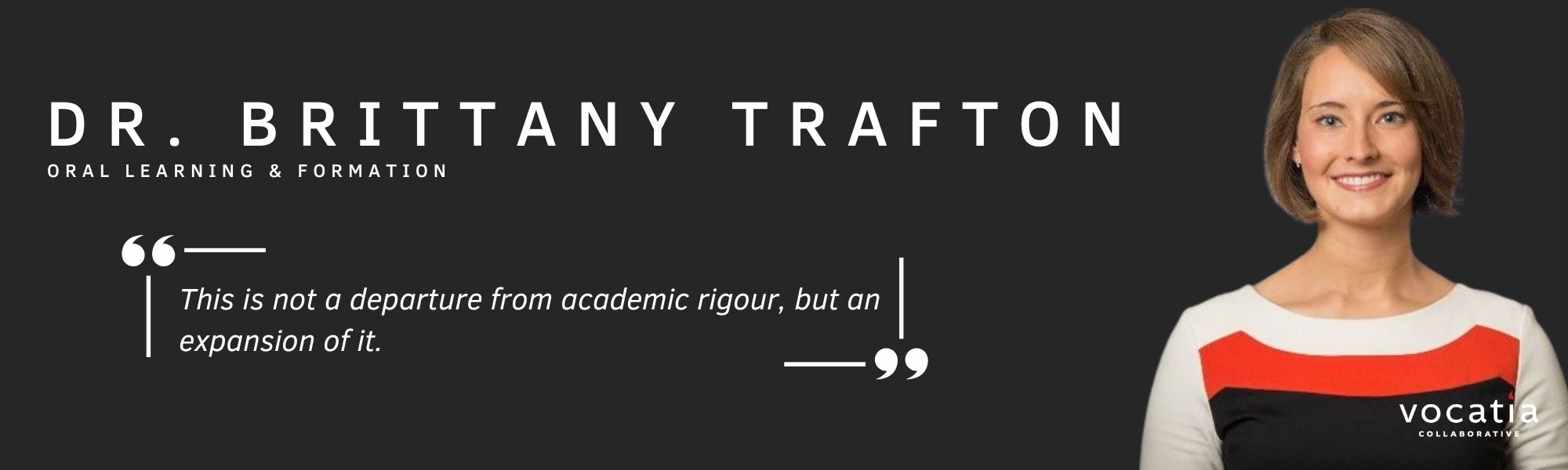
Leading this work at Kingswood is Dr. Brittany Trafton, whose research explores how oral preference learning contributes to the formation of wise, thoughtful, and faithful ministry leaders.
According to Dr. Trafton, wisdom isn’t formed through information alone. It grows as students engage in meaningful conversations, learn alongside trusted mentors, reflect on their experiences, and put their learning into practice.
Oral preference learning isn’t about lowering academic standards. It’s about expanding the ways students learn while maintaining the same commitment to theological excellence.
“Oral preference learning creates space for formation that is relational, contextual, and deeply integrative… This is not a departure from academic rigour, but an expansion of it… preparing leaders who are not only equipped for ministry but are being transformed for it.”
Investing in the Future of the Church
While co-vocational ministry and oral preference learning may appear to be different areas of focus, they share a common purpose.
Both seek to prepare leaders who can faithfully serve Christ in an ever-changing world.
Through the Vocatia Collaborative, Kingswood is investing in research, faculty development, innovative programming, and meaningful partnerships with churches, not simply to respond to today’s challenges, but to help shape the future of ministry for generations to come.
It’s a commitment rooted in the belief that the Church deserves leaders who are spiritually mature, theologically grounded, and equipped to serve wherever God calls them.
Save the Date: Co-Vocational Ministry Seminar
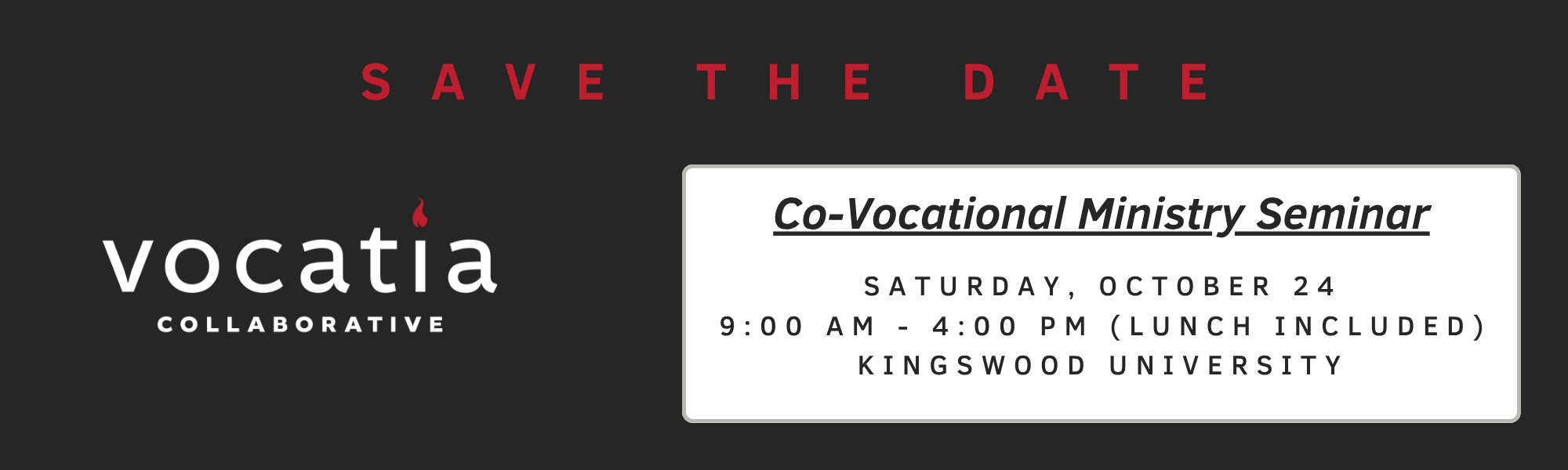
One of the first opportunities for pastors and churches to engage with this work will be the Co-Vocational Ministry Seminar, hosted by Kingswood University on Saturday, October 24.
Co-vocational ministry blends two or more callings into one unified vision for Kingdom impact, serving both within the local church and through another vocation. Research conducted by Stephen Hawcko at Wycliffe College found that Canada experienced an 800% increase in co-vocational churches over the past decade, making this one of the fastest-growing models of ministry in the country.
This one-day seminar will create space for pastors, church boards, and ministry leaders to learn together, share experiences, and explore practical ways to strengthen co-vocational ministry.
Participants will discover how to:
- Equip church boards to support co-vocational pastors.
- Encourage healthy and sustainable ministry rhythms.
- Empower congregations to partner more effectively with their pastors.
- Rethink ministry together for greater Kingdom impact.
Saturday, October 24
9:00 a.m.–4:00 p.m. (Lunch included)
Kingswood University
For more information, please contact Dr. Justin Bradbury at bradburyj@kingswood.edu.
As Kingswood looks ahead, the Vocatia Collaborative represents a long-term commitment to serving the Church by preparing leaders who are ready for wherever God calls them next.